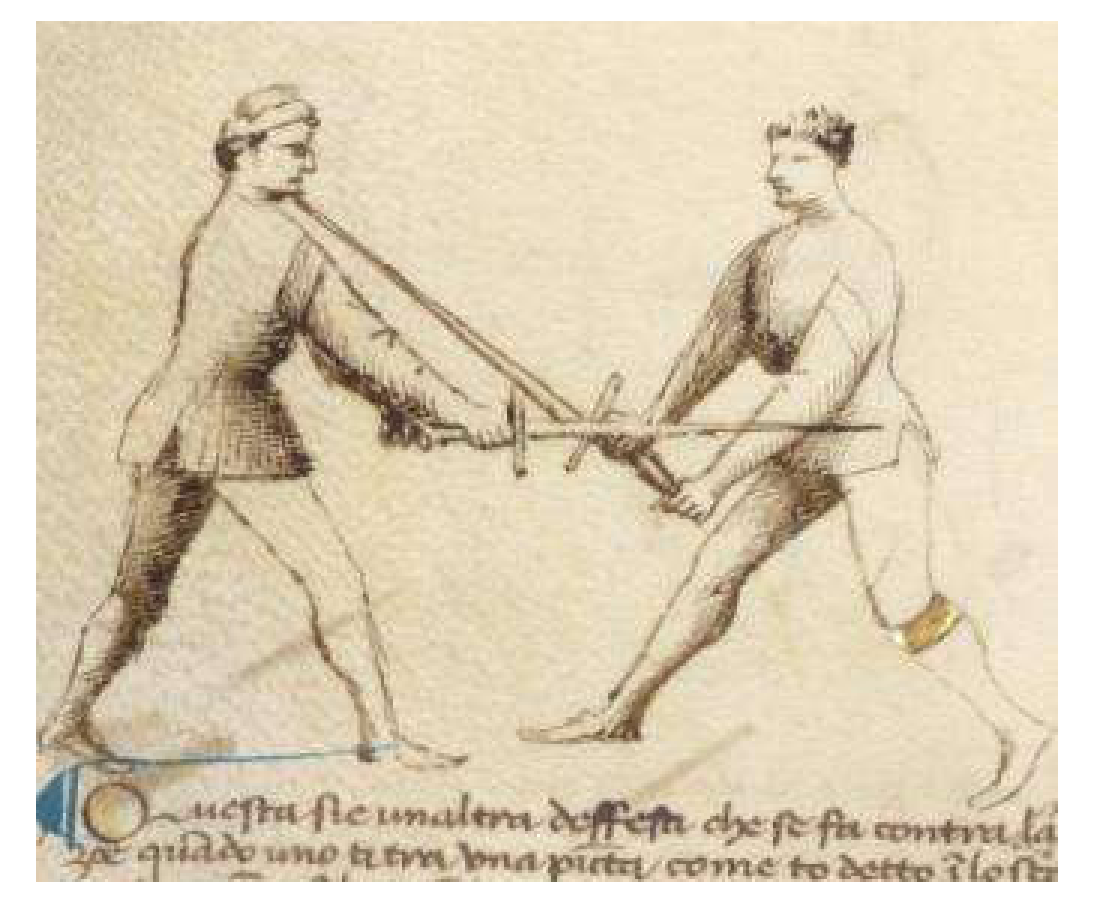
[26v-a] ¶ This play is named “The Exchange of Points”, and it is done like this: when your opponent thrusts at you, quickly advance your front foot off the line, and with the other foot step to the side, also moving off the line, crossing his sword with your hands low and with your point high into his face, or chest, as you see drawn here.
Thrust have a narrow arc of attack- you can void with very little movement and still be oriented at your opponent. Step and cover prevents you from being hit with a reverse cut as they realise you've frustrated their attack and as you can see from the illustration they're pretty likely to just run onto your sword if they've overcommitted.
3.4
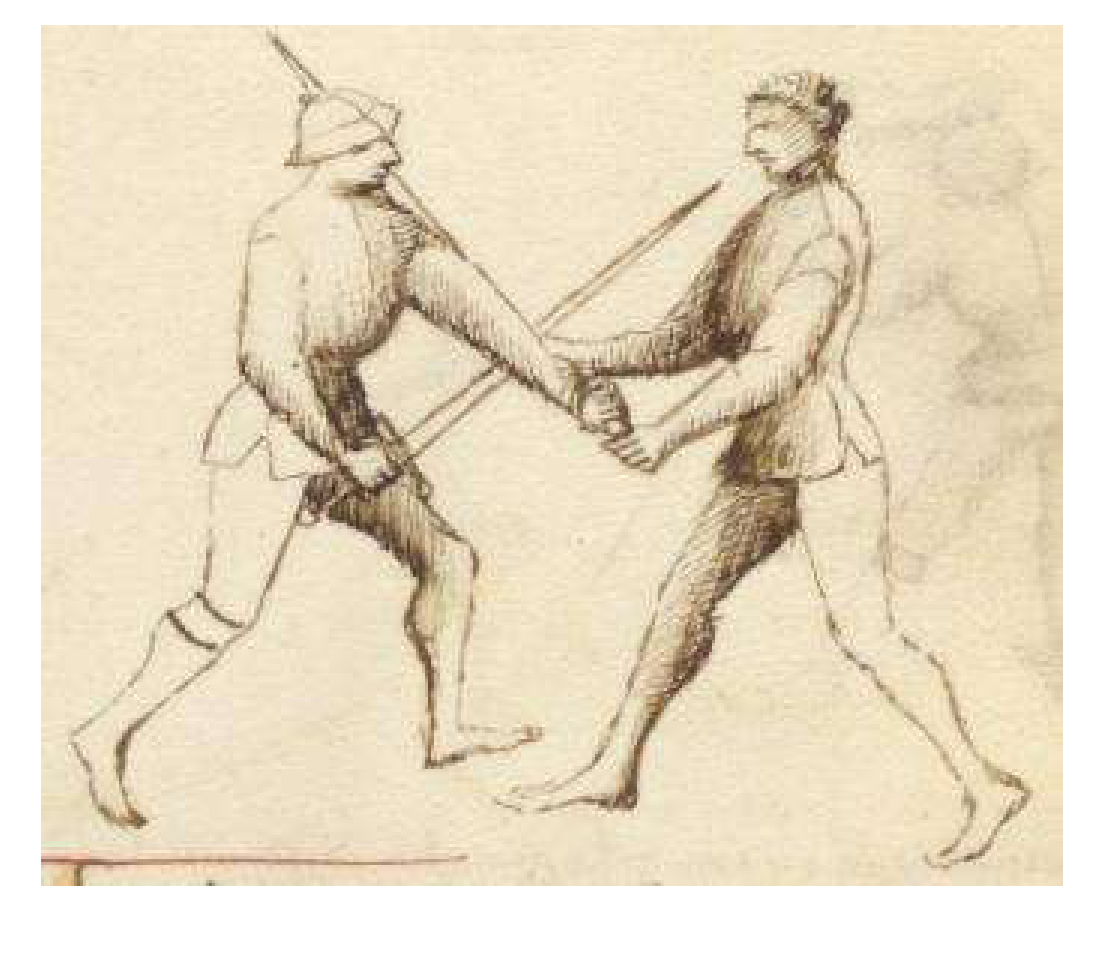
[26v-b] ¶ This play comes from the exchange of points that came before me. If you make the thrust, and your opponent fails to immediately position his point either into your face or into your chest, perhaps because you are in armor, then you should quickly pass forward with your left foot, and seize his sword as shown here. Then strike him hard with your sword, since you have his sword gripped and he cannot escape. [14v-d] From this exchange of thrusts that came before me comes this play. Given that the Scholar who came before me did not immediately thrust his point into the face of the player, or that he failed such that he could not thrust into [the player’s] face nor into his chest, or that the player was armored, then immediately the Scholar should step with his left foot forward, and he should grab [the player] in this manner, and his sword should throw a good strike because the
Grabbing the hilt after a thrust is much safer than a general blade grab. If your oppo has committed with the thrust then they can take quite a while to recover which gives you a good window to grasp their sword. Again, controlling their sword enables you to attack without fear.
3.5
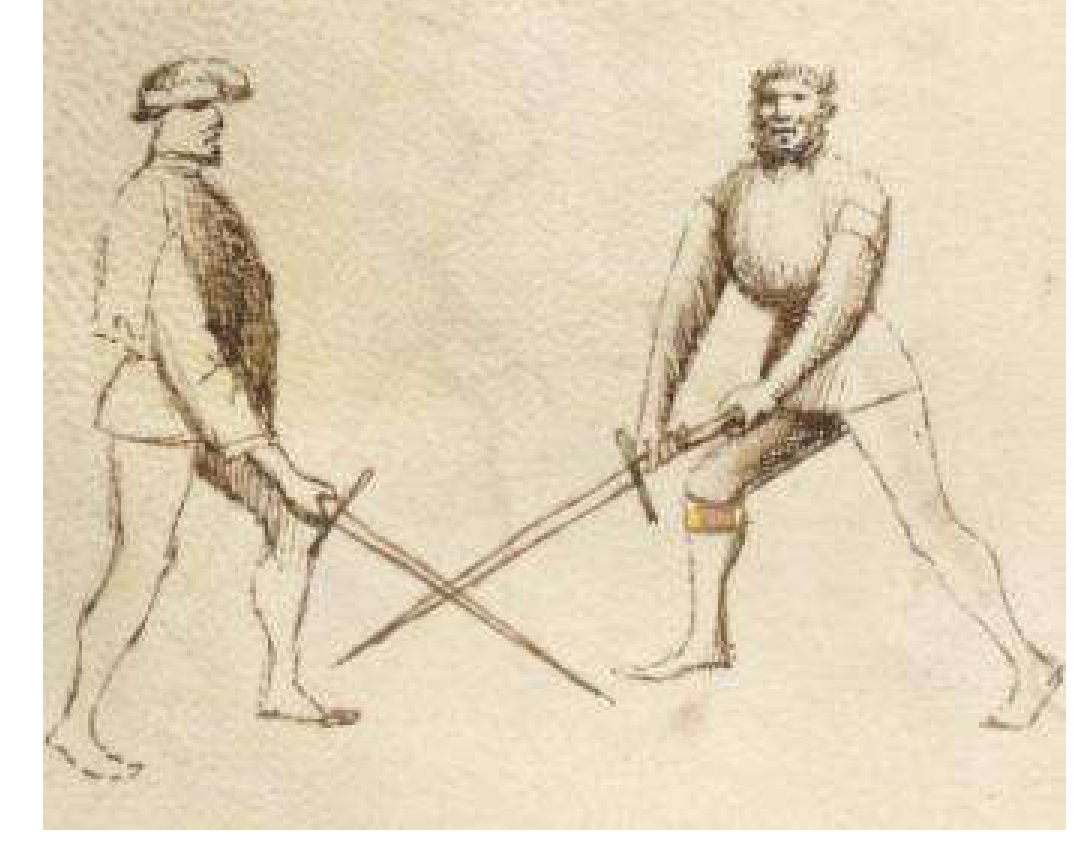
[26v-c] ¶ This is another defense you can make against the thrust. When someone thrusts at you as described in the “Exchange of Thrusts”, two plays before me, then you must advance and step off the line. You should do the same thing in this play, except that in the “Exchange of Points” you thrust back with your hands low and your point high, as I explained earlier. But in this play, which is named “Breaking the Thrust”, you proceed with your hands high and as you advances and step off the line you strike downwards, crossing the opponent’s thrust at mid-sword, and driving it to the ground. Then you quickly close to grapple.
Beat and close for grapple. Generally not recommended unless you have a size advantage.
3.6
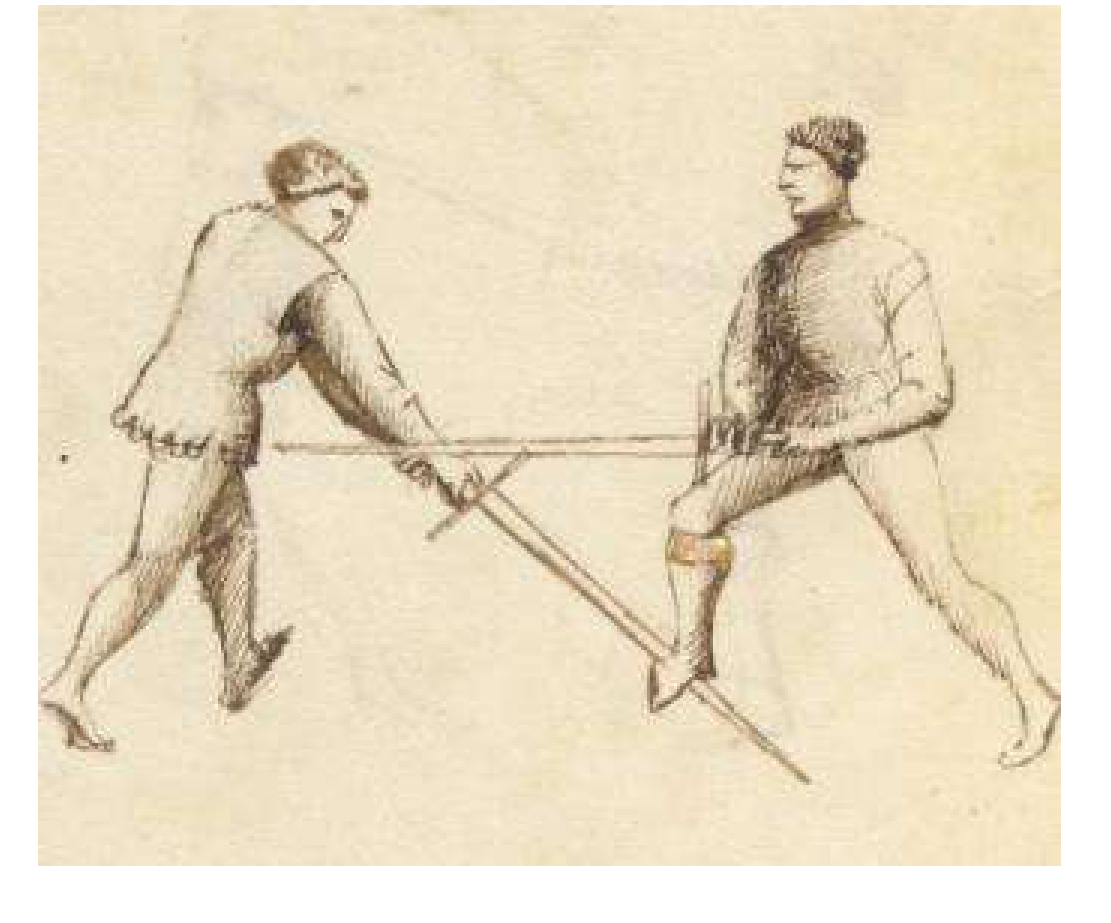
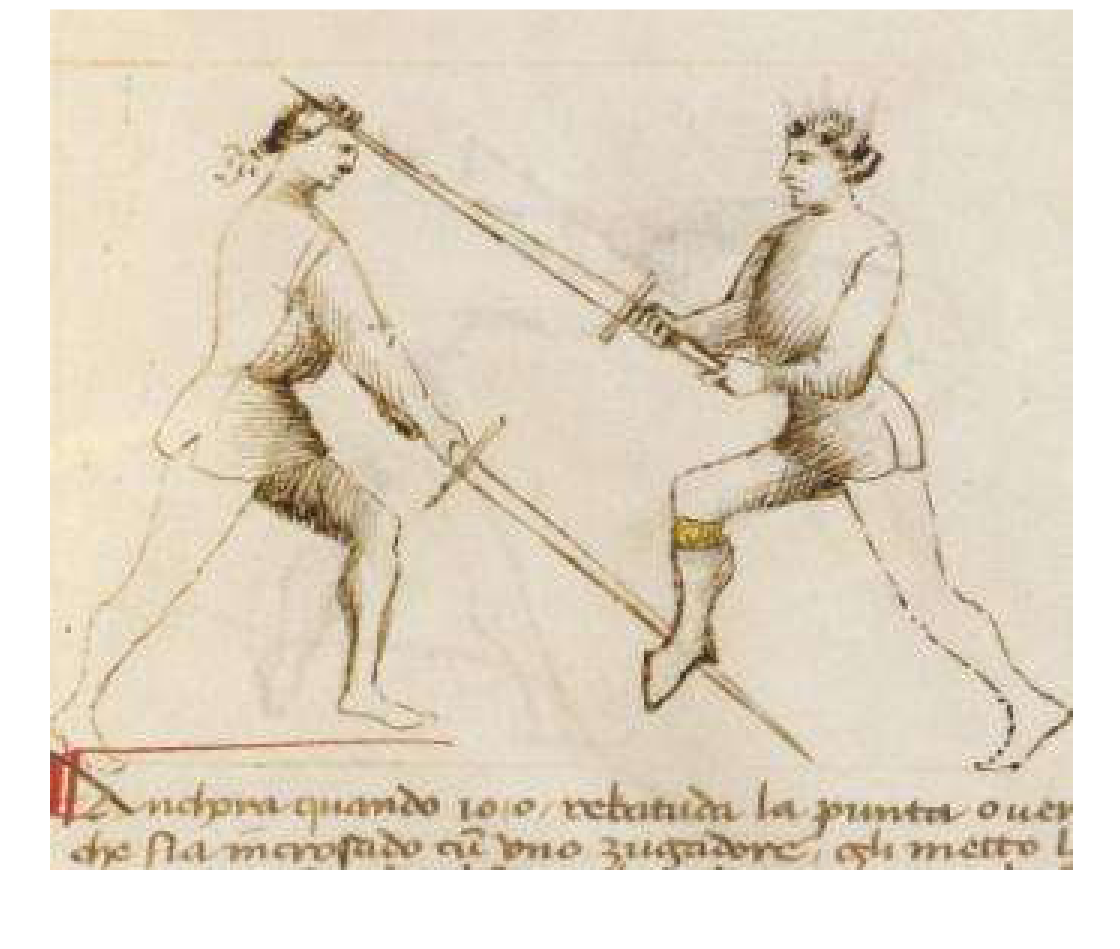
[26v-d] ¶ The student who preceded me beat his opponent’s sword to the ground. Now I am going to complete his play, as follows: after I beat my opponent’s sword to the ground I stomp on it with my right foot. This will either break it or prevent him from being able to lift it. But wait—there’s more. As soon as I have pinned his sword to the ground with my foot, I strike him with the false edge of my sword under his beard or into his neck. And then immediately I will return with a downward strike of my sword to his arms or his hands, as you see drawn here.
See my comment about this on Peasant Strike Nylons only. Don't damage your oppo's equipment
3.7
27r-a] ¶ Here is another drawing of the “Breaking the Thrust” play, that you saw first two drawings previously. After I have beaten his sword to the ground I quickly pin it to the ground with my right foot, and then strike him in the head, as you see shown here.
3.8
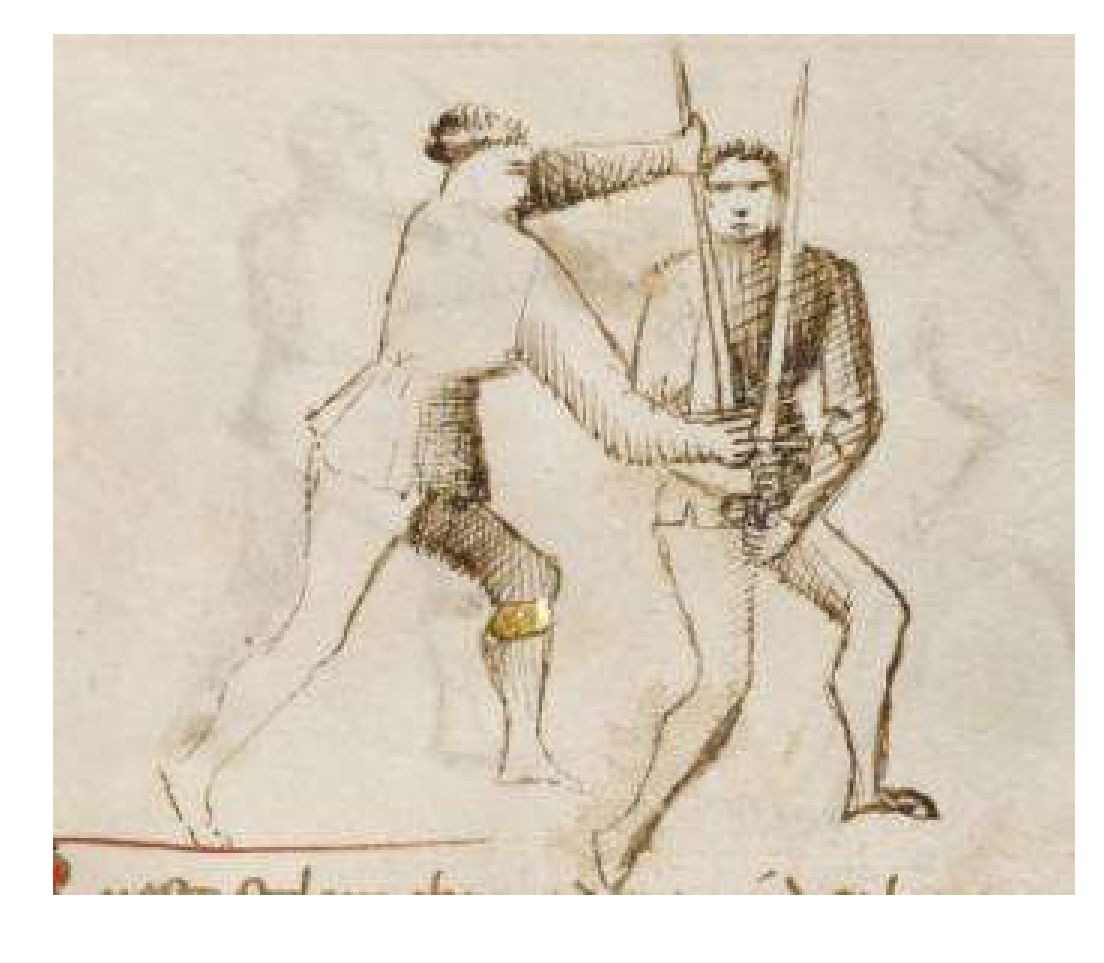
[27r-b] ¶ This is another play that flows from the “Breaking of the Thrust” play. After I break his thrust, if he raises his sword to cover as I strike upwards, I quickly drop the hilt of my sword inside his right arm, near his right hand, then I grab my blade near the point with my left hand, and then strike him in his face. Or alternatively, if I chose, I could drive my sword edge into his neck, slicing him across his throat.
This can be done in many different situations. You're using the hilt to control his right (leading hand) and then driving the blade into his neck. You can use it as a throw to drive your oppo's face into the mat- nobody argues with a blade at the back of their neck. Especially with a wrist lock on.
3.9
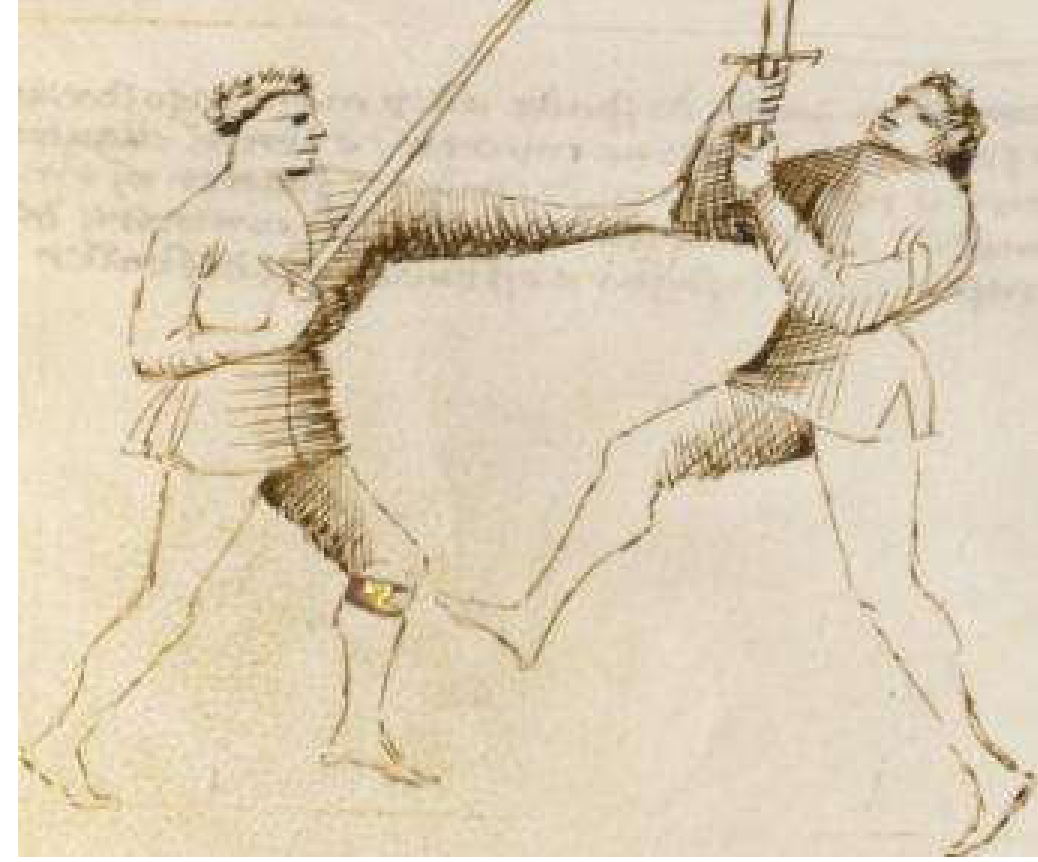
[27r-c] ¶ Also, after I have beaten aside or crossed my opponent’s sword, I can press my left hand to his right elbow and push strongly. This will turn him and leave him unprotected, after which I can strike him.
This is a good default move- when in doubt elbow shove. Hold on if you can, but if not you're still creating an opening to shiv into.
3.10
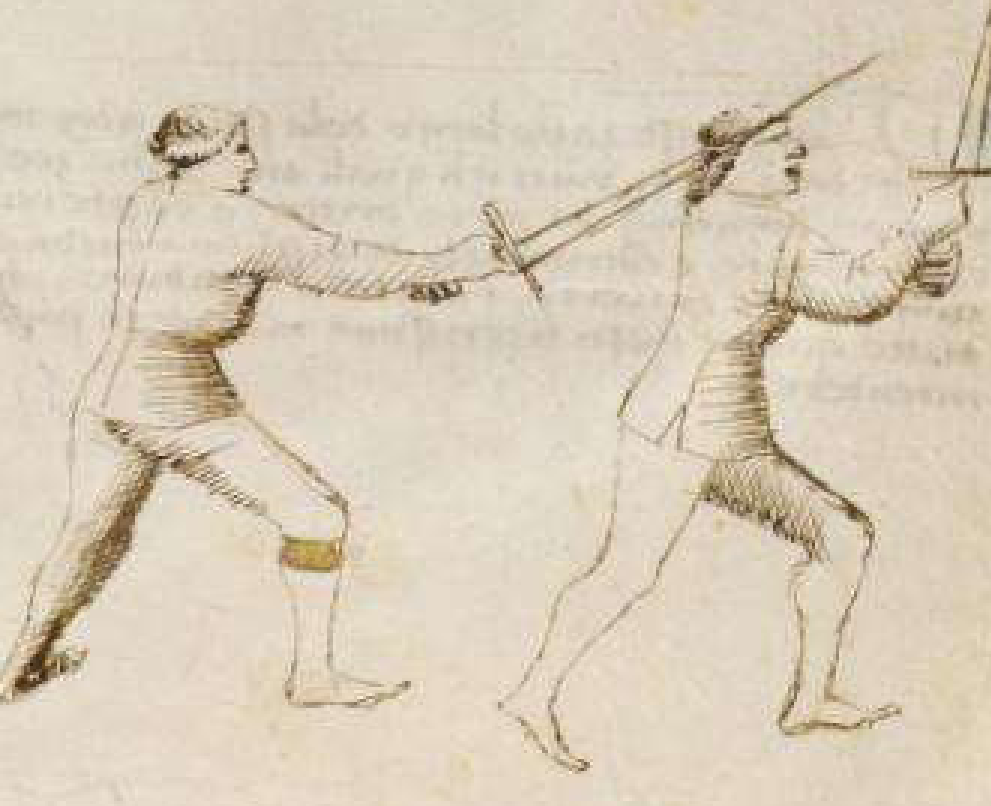
27r-d] ¶ The student who preceded me spoke truly when he told you that he could turn the opponent and cut to his head. In addition, before you could turn back to make cover I would give you a major wound in your back with the point of my sword
I've not seen an elbow shove give enough momentum to do this. It's possible, but unnecessary.
3.11