#Fiore #LongSword #Introduction
Basics
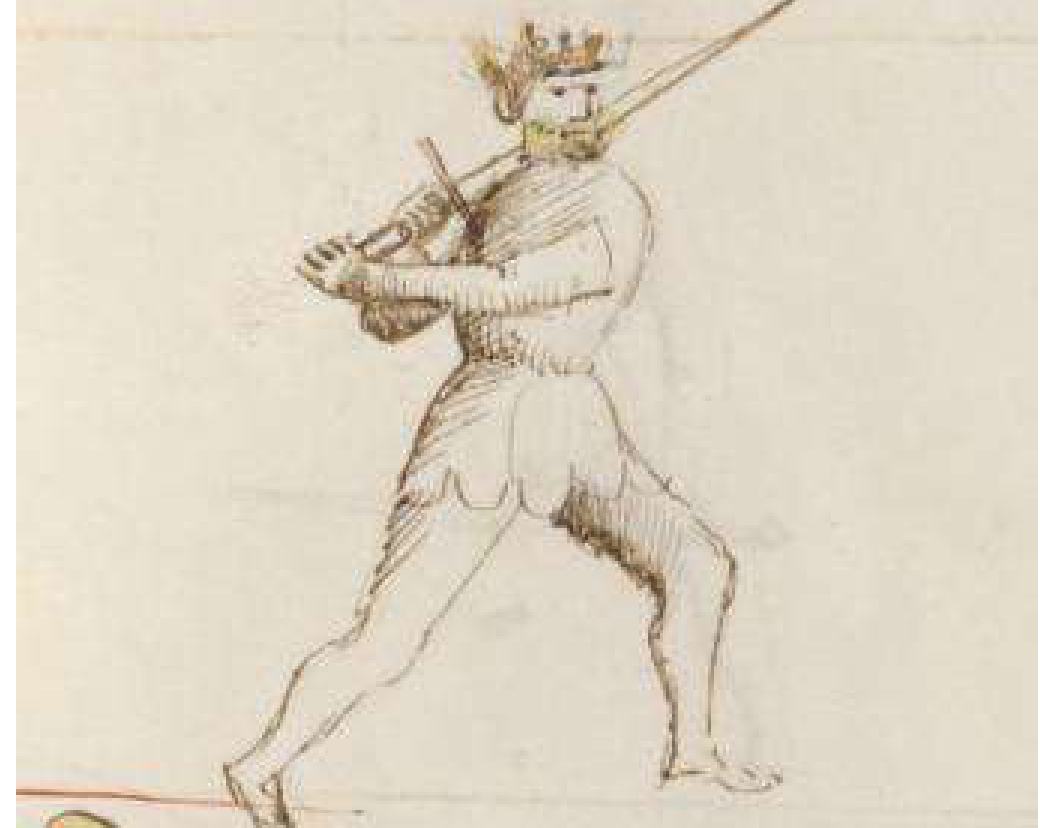
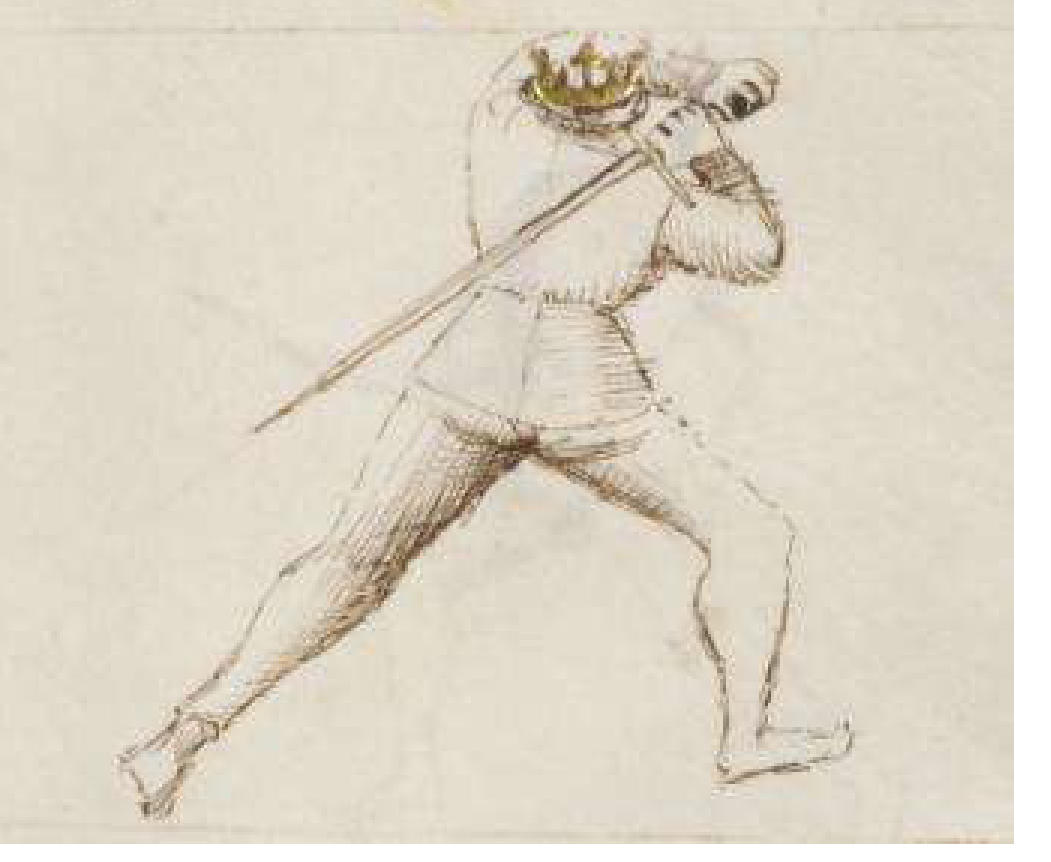
The man wearing a crown or garter is the winner. Masters tend to be situations and remedies are ways out.
The plays are grouped as Wide Plays and Narrow Plays These are defined by the space you have to act at the bind. Wide plays mean you have more room to move offline, and narrow plays essentially force you to move through your opponent. Gross simplifications as you'll see, but a useful shorthand.
It's important to take these plays as descriptive rather than prescriptive. You find yourself in that position and work through. If you intend to set up a play,
you will inevitably fail as you ignore all the better openings when chasing your ideal outcome.
The ideal outcome of any swordfight is having the same amount of holes on exit as on entrance.
Below are the opening paragraphs to Fiore's chapter on Sword in Two Hands. It's important to note that guards can be cycled with a stable turn, half turn and full turn. This is a practicality to allow for multiple combatants. Although HEMA is generally 1v1 this information helps construct flow in your head. Window with Stable Turn becomes Lady. Boars Tooth with a half turn becomes Iron Door. Posta Longa with a full turn remains Posta Longa, but facing the other way.
¶ We are two guards that are similar to each other, and yet each one is a counter to the other. And for all other guards yet each one is a counter to the other. And for all other guards in this art, guards that are similar are counters to each other, in this art, guards that are similar are counters to each other, with the exception of the guards that stand ready to with the exception of the guards that stand ready to thrust—the Long Guard, the Short Guard and the Middle Iron Gate. For Long Guard, the Short Guard and the Middle Iron Gate. For when it is thrust against thrust the weapon with the longer when it is thrust against thrust the weapon with the longer reach will strike first. And whatever one of these guards reach will strike first. And whatever one of these guards can do so can the other. And from each guard you can make a “turn in so can the other. And from each guard you can make a “turn in place” or a half turn. A turn in place is when without actually place” or a half turn. A turn in place is when without actually stepping you can play to the front, and stepping you can play to the front, and then…
to the rear on the same side. A half turn is when you make a step forwards or backwards and can switch sides to play on step forwards or backwards and can switch sides to play on the other side from a forwards or backwards position. A full turn is other side from a forwards or backwards position. A full turn is when you circle one foot around the other, one remaining when you circle one foot around the other, one remaining where it is while the other rotates around it. Furthermore where it is while the other rotates around it. Furthermore you should know that the sword can make the same three should know that the sword can make the same three movements, namely stable turn, half turn and full movements, namely stable turn, half turn and full turn. Both of these guards drawn below are named the Guard of the Lady. these guards drawn below are named the Guard of the Lady. Also, there are four types of movement in this art, namely Also, there are four types of movement in this art, namely passing forwards, returning, advancing, and passing forwards, returning, advancing, and withdrawing.