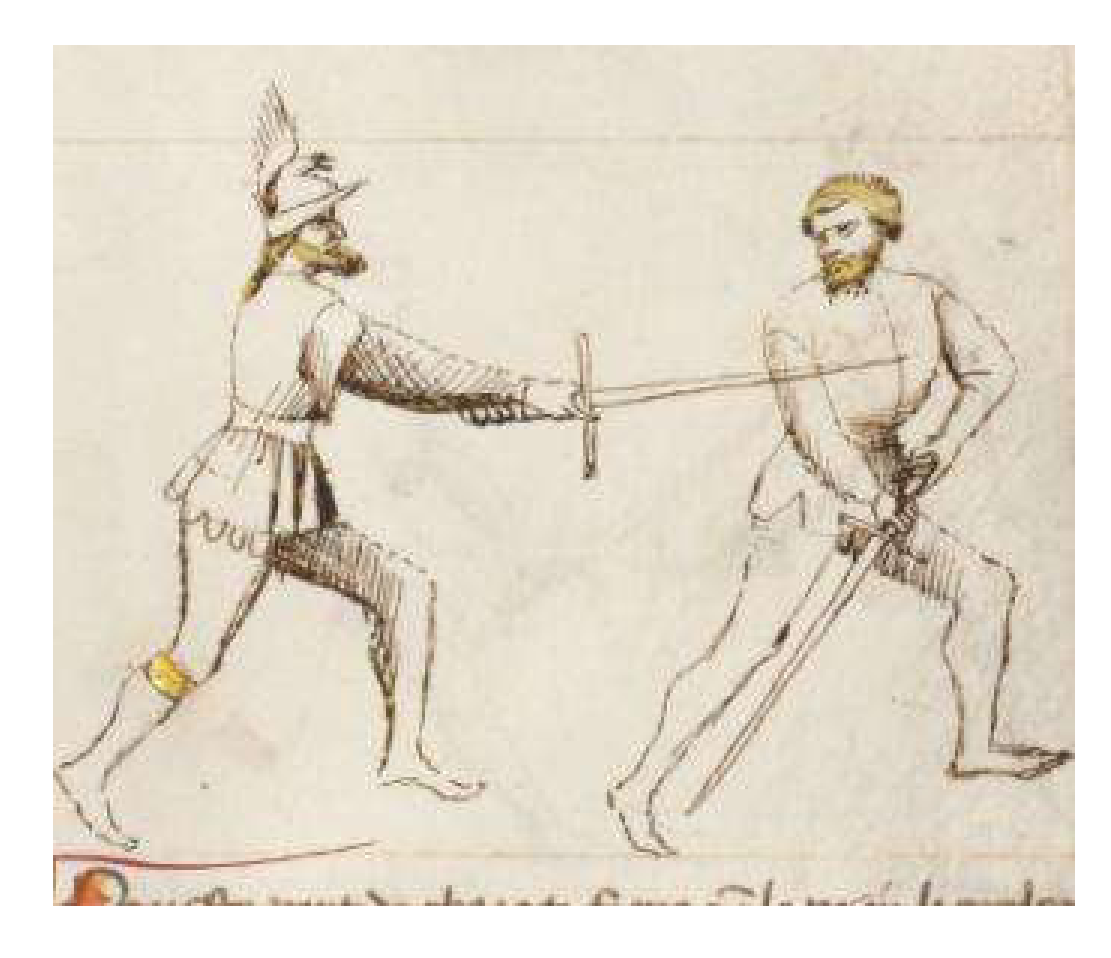
[26r-a] ¶ This play is named “The Peasant’s Strike” and you do it like this: take a narrow stance with your left foot forward, and wait for the Peasant to attack first with his sword. When he launches his attack, immediately advance your left foot to the left off the line, and step diagonally off line to the left with your right foot, receiving his strike in the middle of your sword. Now let his sword slide off yours to the ground, and then quickly counter-attack with a downward strike to his head or arms, or a thrust into his chest as you see drawn in the next picture. This is also a good play if you are fighting sword versus poleax, or against a heavy or light staff.
This is a good example of weak against strong. There's no point opposing a strike like this. Deflecting it and attacking into the resulting opening is way more efficient. Be warned though, you can steal a lot more of your attacker's momentum than you expect- causing you to hit significantly harder than you intended. Not an issue in a life or death situation but not good for the salle.
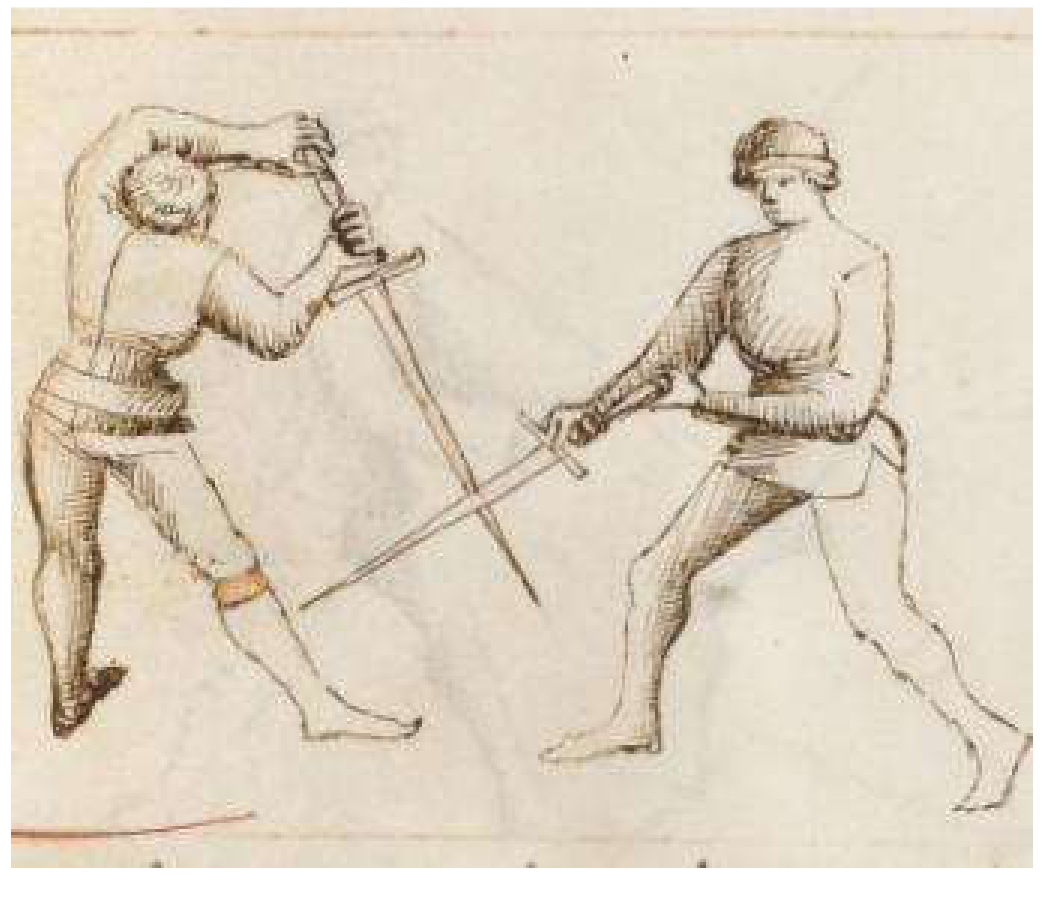
[26r-b] ¶ In the previous drawing you saw the Peasant’s Strike, in which you saw a thrust well-placed into the attacker’s chest. And alternatively he could have struck a downward blow to the opponent’s head or the arms, as I explained previously. Also, if the opponent seeks to counter me by striking back up with a rising blow to my arms from the left, I quickly advance my left foot and place my sword over his, and from this position he can do nothing to me.
If they recover you could be hit with a rising blow (coming up to your left hip) Stepping on their sword is a nice way to counteract that while you're busy shivving your opponent. I'd only recommend doing this with nylons and previously arranged consent. Bending someone's feder with this is just impolite.