Wide play is not a measure of distance, but of what's possible in the bind. Your feet are opposed (so both on right foot) which means you can step off line more.
Peasant Strike
Exchange of Thrusts
False Point
This Master who is crossed at the point of his sword with this player says: “When I am crossed at the points, I quickly player says: “When I am crossed at the points, I quickly switch my sword to the other side, and strike him from that side with my sword to the other side, and strike him from that side with a downward blow to his head or his arms. Alternately, I can a downward blow to his head or his arms. Alternately, I can place a thrust into his face, as the next picture will place a thrust into his face, as the next picture will show.
This is a disengage and cut. Best performed when you're weak on weak (swords meeting near the tip) Switching the blade should be a small movement, with your lead wrist barely changing position.
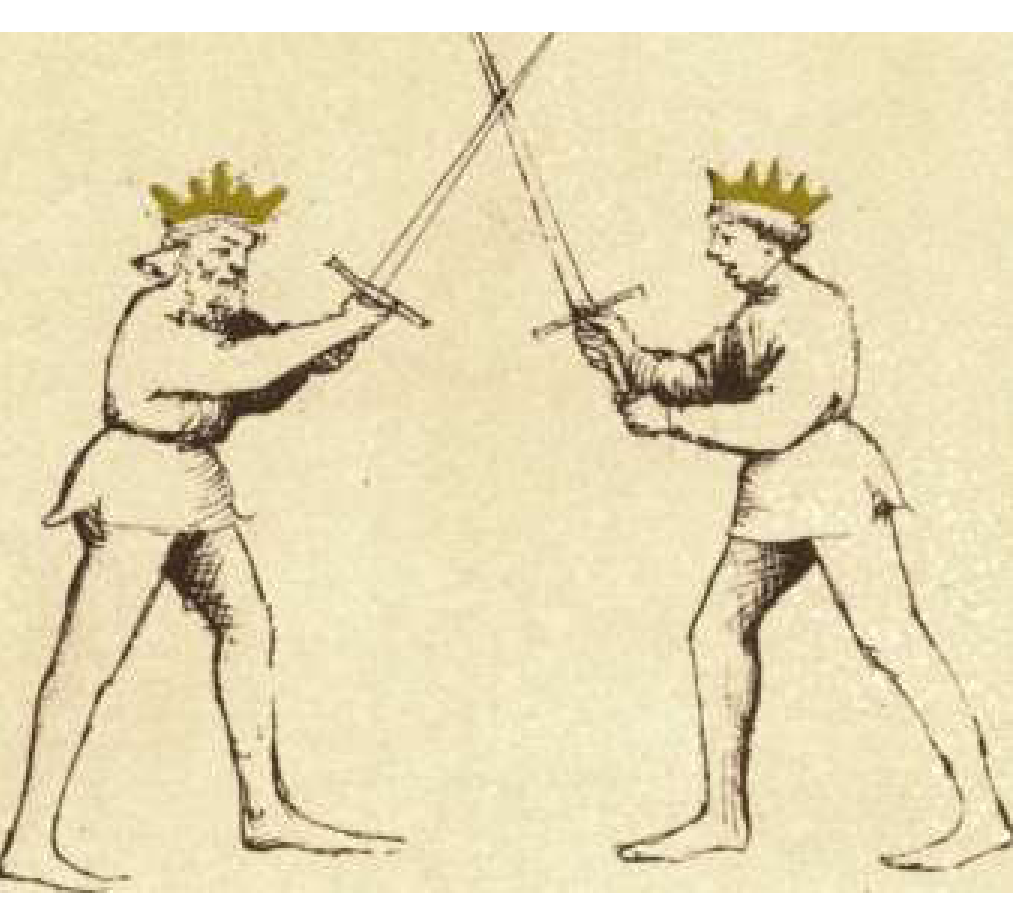
Also, I could have made the [other] play that he said—that is, to have attacked with my sword immediately when I was to have attacked with my sword immediately when I was beside the crossing of the right side: from the other side beside the crossing of the right side: from the other side (that is, from the left) I should have immediately turned my sword is, from the left) I should have immediately turned my sword into a downward blow to the head and to the arms, as has into a downward blow to the head and to the arms, as has said my Master that came my Master that came before.
Here you're driving down the blade as you come in. It's important to maintain as much mechanical advantage as possible and be wary of a double coming in if you both choose this remedy. It's a short distance to move and speed gives greater advantage than usual.
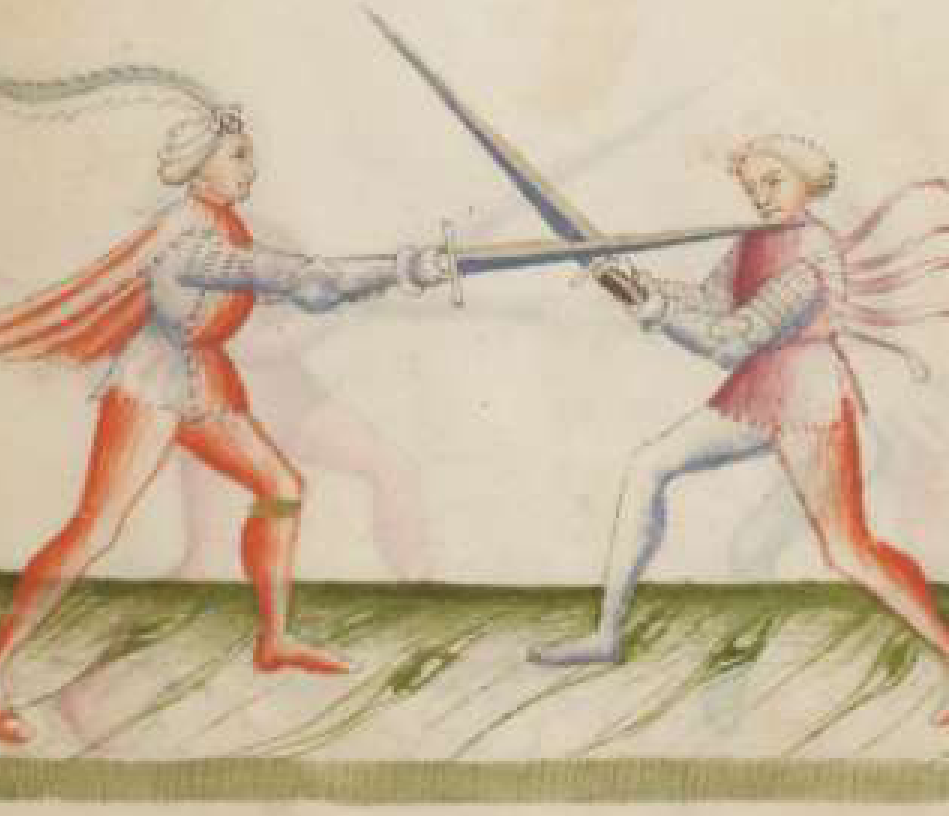
5v-a] ¶ I too am crossed in the Wide Play, but this time at the middle of the swords. And immediately after making my cross I let my sword drop down to slide forwards and backwards over his hands. Or, if I choose to pass forward with my right foot and move offline, I can then make a thrust into your chest, as you will see drawn next.
Like previous, except instead of stabbing the face, you Go for the hands. Bit risky on mechanical advantage grounds but solid move due to the small distance needed to attack. The offline pass is great as it moves you out of the danger zone for your opponent's thrust and gives greater mechanical advantage against cuts.

a] My Master who came before has taught me that when I am crossed at the mid-sword, I should immediately advance forward and grab his sword (as in this match) in order to strike him with edge or point. Also, I can waste his leg in the way that you will be able to see depicted hereafter by striking with my foot over the back of his
All blade grabs are risky. If your opponent attempts to disengage you will say bye-bye to your fingers if your timing is out. Blade must be still for grabbing and once you've got hold of it you do not let go. That said. If you've got a solid hold on the hurty end, it is no longer a threat and your oppo can get more perforations than a tetley's tea bag.
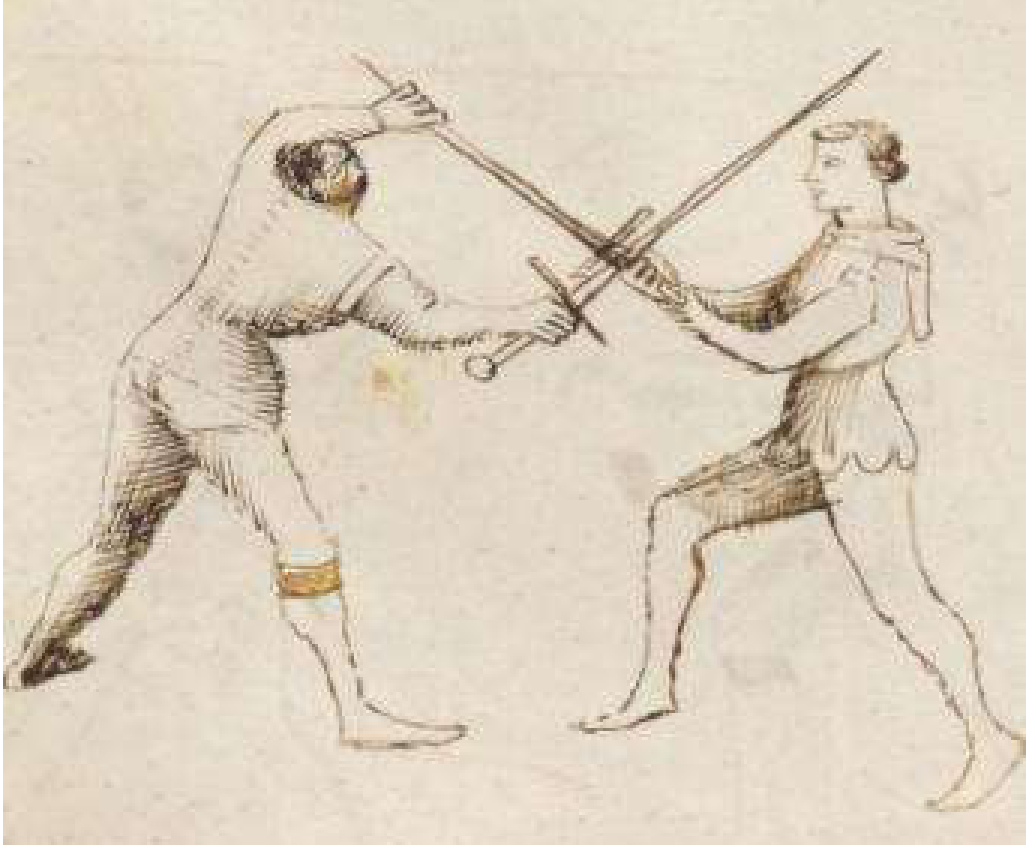
14r-b] The Scholar who came before me says of his Master and mine that he has taught this play, and I do it to crumple [my opponent]. Without a doubt, to do it is little trouble to me.
DO NOT DO THIS. Turning your opponent's knee inside out is a lovely defensive move and perfectly acceptable as long as you don't want your opponent to walk again. This is martially sound and naturally follows with the previous blade grab if there's a tussle. But it can permanently injure your training partner and force them to quit swordplay. DO NOT DO THIS.
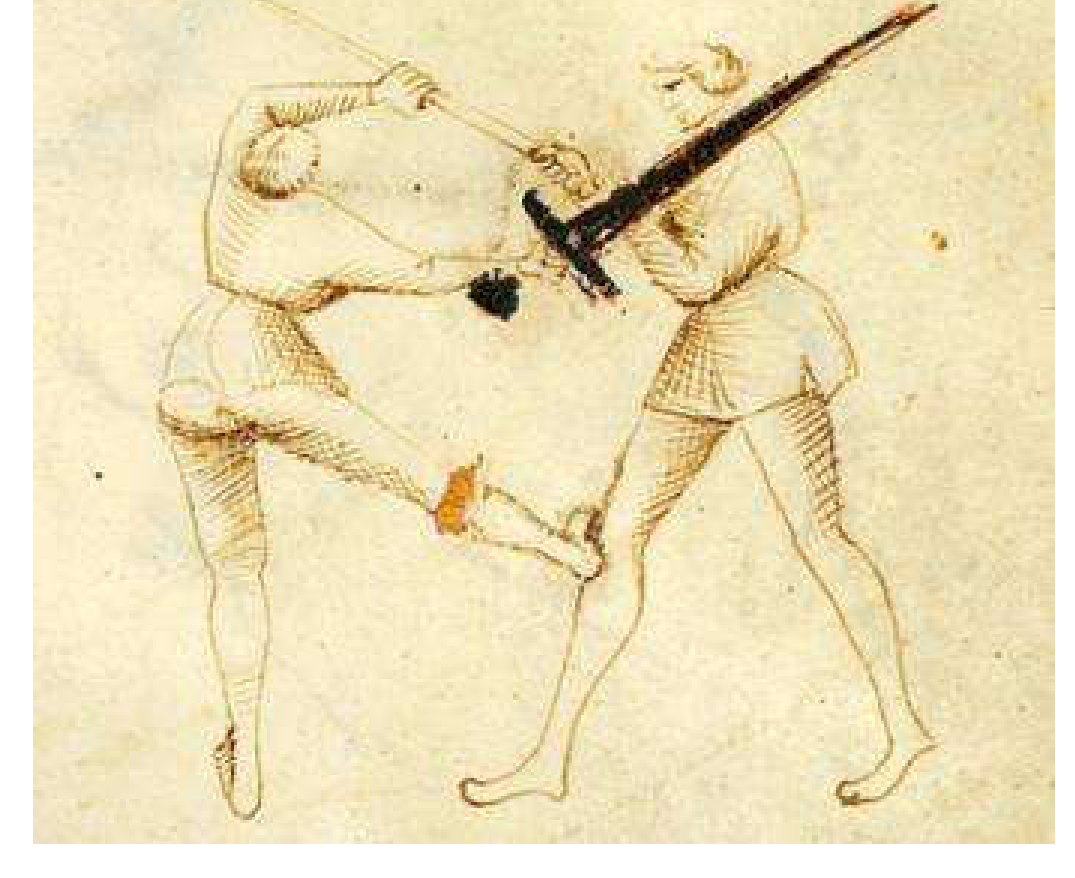
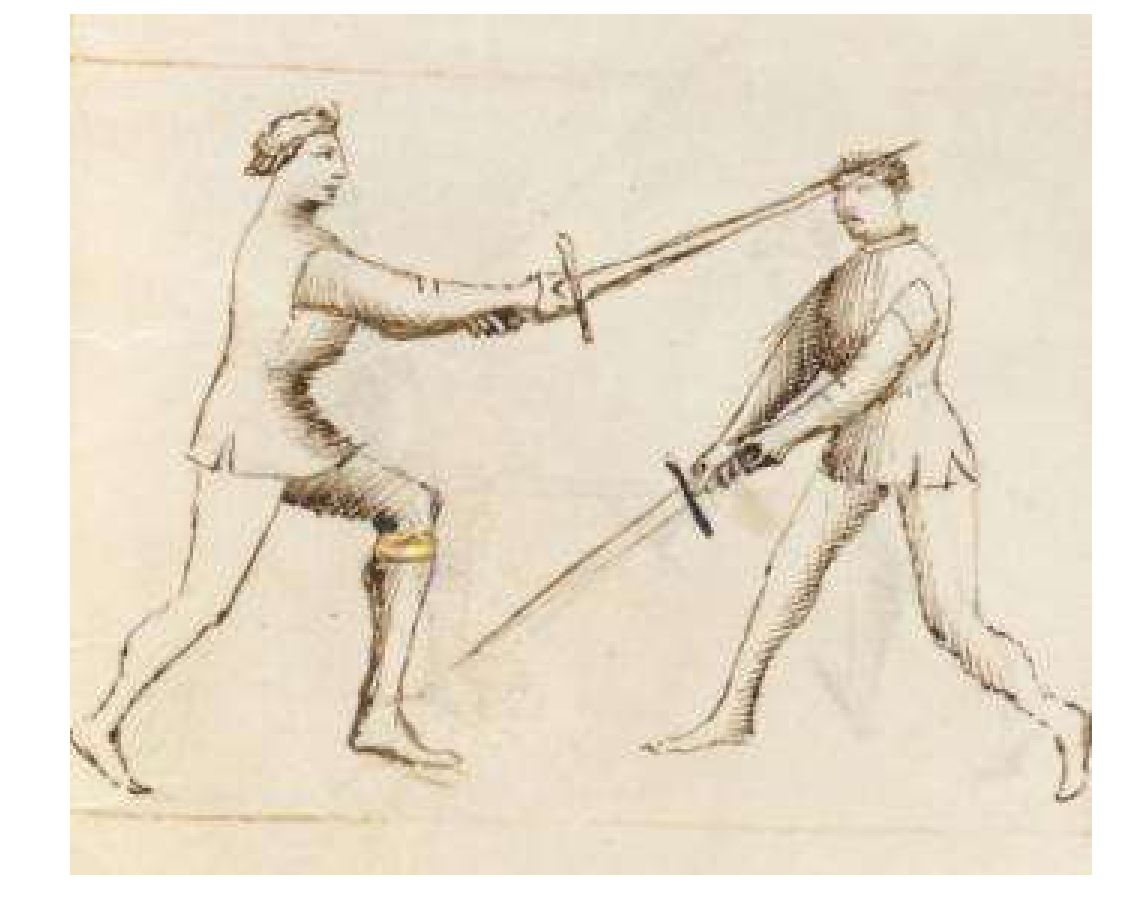
[26r-c] ¶ If your opponent strikes to your leg, withdraw your front foot, or pass backwards and strike downwards to his head, as shown in the drawing. With a two handed sword it is unwise to strike to the knee or below, because it is too dangerous for the one striking. If you attack your opponent’s leg, you leave yourself completely uncovered. Now, if you have fallen to the ground, then it is all right to strike at your opponent’s legs, but otherwise it is not a good idea, as you should generally oppose his sword with your sword.
When will I ever use Pythagoras? Here. Never be the hypotenuse. Reaching for the leg will expose your head and even if they don't void (which is surprisingly easy and reflexive) an ankle wound is rather trivial compared to the new brain piercing you'll acquire.
3.2
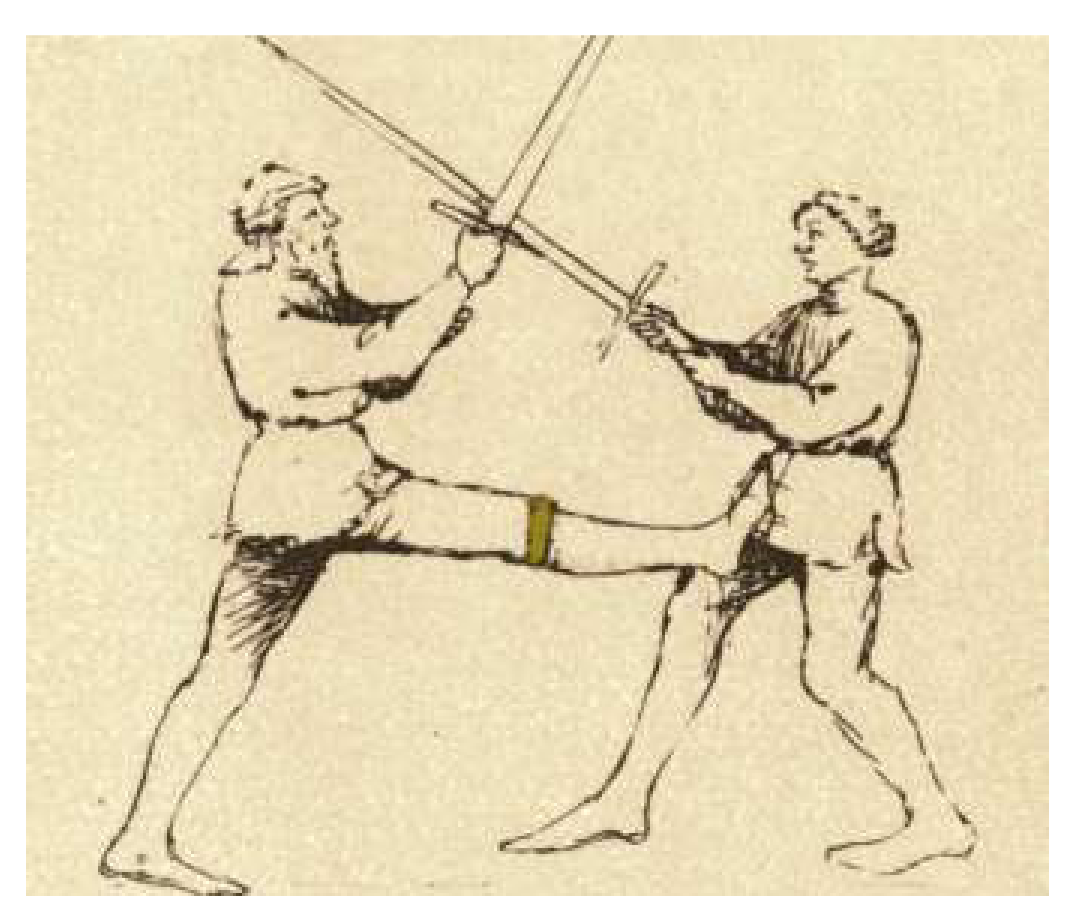
I strike his testicles with my right foot.
Simple. Effective. Often Frowned upon. ALWAYS CHECK IF YOUR OPPONENT HAS A BOX- and even then be gentle. Boxes don't protect from the most determined kicks and best case scenario they can snap and re-seal pinching your scrotum causing considerable pain for you and hilarity for all those who heard you say "do your worst, I'm wearing a box"
3.3